Erik Klinga Hundred Tongues Vinyl LP 2026
- Spring To Mind
- Opaque Stars
- Conspiracy Of Silence
- Fall Again
- Hundred Tongues
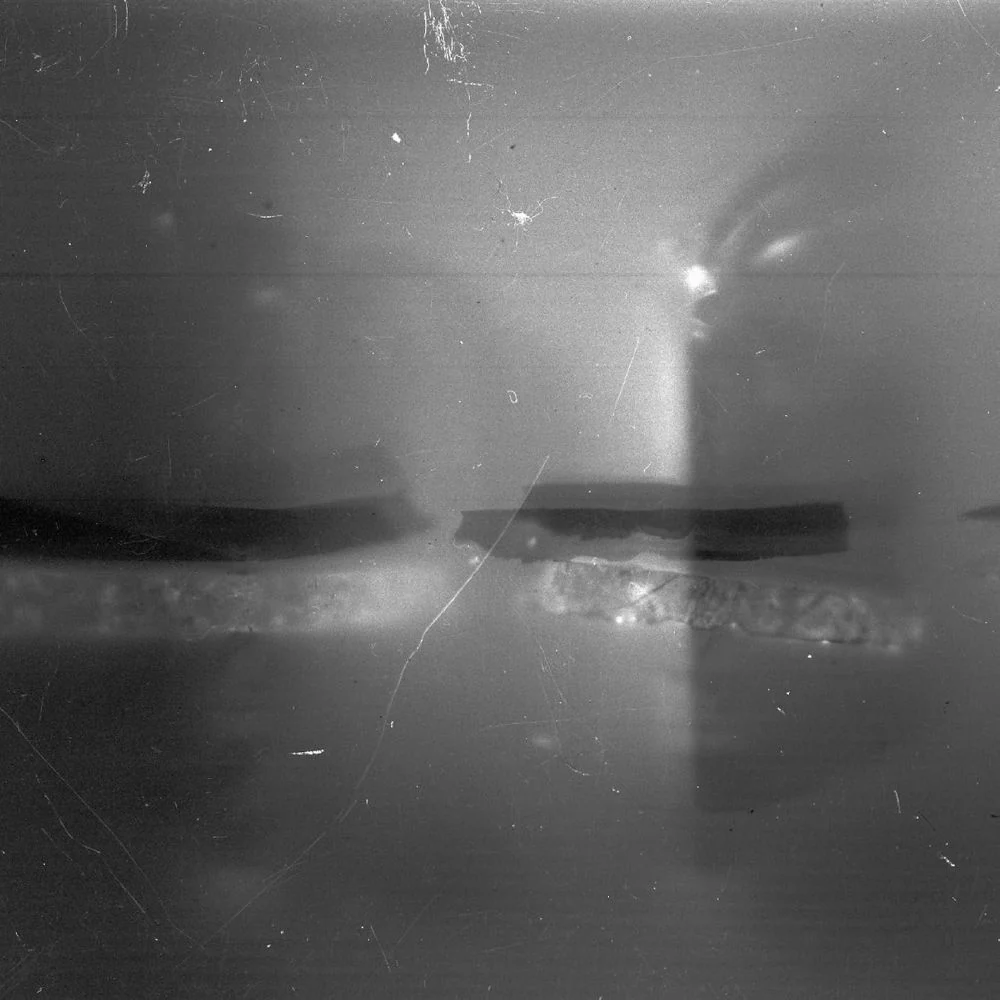
The Swedish electroacoustic composer Erik Klinga presents "Hundred Tongues", the second installment—following "Elusive Shimmer" (2025)—in a trilogy of albums released by the Thanatosis label. Issued digitally and as a limited edition of 200 copies on 180-gram vinyl housed in an Invercote sleeve, it continues Klinga’s intricate exploration of sound and space.
Darker and more dystopian in its bloom, "Hundred Tongues" absorbs the unease of the present and yet throws a flash of light, albeit blinding. Composed at Malmö Art Museum on the 16th-century Genarpsorgan, and threaded with Buchla synthesizer, field recordings from Skåne and Öland, and a deliberate, focused touch, it unfolds as one long form: episodes that coil, return, and reconfigure rather than resolve.
“Spring to Mind” begins with static and the pressure of thin air, as though drawn from the negative space between signals. Noise condenses into a hum, clarifies into tone, and organ chords hover between physical and imagined terrain. “Opaque Stars” blurs the seam between pipes and circuits, its crystalline timbre evoking avian song. “Conspiracy of Silence” brings the birds into focus—the collared flycatcher’s cascade of notes intertwines with trembling pipes, suggesting communion through attentive listening.
The eighteen-minute title piece sits at the work’s centre, opening in ambiguity—crackles, murmurs, and clicks that dissolve into organ and Buchla tones hovering between noise and tone. In Swedish lore, songbirds were said to have a hundred tongues; here, organ and synthesizer breathe as one. Stitched from live recordings in Skovgaardsalen, Norberg kyrka, and Koncertkirken, the suite ends with the return of the everyday world.
Klinga’s music slows perception and bridges centuries. Pairing one of Sweden’s oldest organs with modular electronics, he reveals the kinship of pipe, circuit, and birdsong—reminding us that listening itself may be the origin of music.
Original: $37.58
-65%$37.58
$13.15Erik Klinga Hundred Tongues Vinyl LP 2026
- Spring To Mind
- Opaque Stars
- Conspiracy Of Silence
- Fall Again
- Hundred Tongues
The Swedish electroacoustic composer Erik Klinga presents "Hundred Tongues", the second installment—following "Elusive Shimmer" (2025)—in a trilogy of albums released by the Thanatosis label. Issued digitally and as a limited edition of 200 copies on 180-gram vinyl housed in an Invercote sleeve, it continues Klinga’s intricate exploration of sound and space.
Darker and more dystopian in its bloom, "Hundred Tongues" absorbs the unease of the present and yet throws a flash of light, albeit blinding. Composed at Malmö Art Museum on the 16th-century Genarpsorgan, and threaded with Buchla synthesizer, field recordings from Skåne and Öland, and a deliberate, focused touch, it unfolds as one long form: episodes that coil, return, and reconfigure rather than resolve.
“Spring to Mind” begins with static and the pressure of thin air, as though drawn from the negative space between signals. Noise condenses into a hum, clarifies into tone, and organ chords hover between physical and imagined terrain. “Opaque Stars” blurs the seam between pipes and circuits, its crystalline timbre evoking avian song. “Conspiracy of Silence” brings the birds into focus—the collared flycatcher’s cascade of notes intertwines with trembling pipes, suggesting communion through attentive listening.
The eighteen-minute title piece sits at the work’s centre, opening in ambiguity—crackles, murmurs, and clicks that dissolve into organ and Buchla tones hovering between noise and tone. In Swedish lore, songbirds were said to have a hundred tongues; here, organ and synthesizer breathe as one. Stitched from live recordings in Skovgaardsalen, Norberg kyrka, and Koncertkirken, the suite ends with the return of the everyday world.
Klinga’s music slows perception and bridges centuries. Pairing one of Sweden’s oldest organs with modular electronics, he reveals the kinship of pipe, circuit, and birdsong—reminding us that listening itself may be the origin of music.
Product Information
Product Information
Shipping & Returns
Shipping & Returns
Description
- Spring To Mind
- Opaque Stars
- Conspiracy Of Silence
- Fall Again
- Hundred Tongues
The Swedish electroacoustic composer Erik Klinga presents "Hundred Tongues", the second installment—following "Elusive Shimmer" (2025)—in a trilogy of albums released by the Thanatosis label. Issued digitally and as a limited edition of 200 copies on 180-gram vinyl housed in an Invercote sleeve, it continues Klinga’s intricate exploration of sound and space.
Darker and more dystopian in its bloom, "Hundred Tongues" absorbs the unease of the present and yet throws a flash of light, albeit blinding. Composed at Malmö Art Museum on the 16th-century Genarpsorgan, and threaded with Buchla synthesizer, field recordings from Skåne and Öland, and a deliberate, focused touch, it unfolds as one long form: episodes that coil, return, and reconfigure rather than resolve.
“Spring to Mind” begins with static and the pressure of thin air, as though drawn from the negative space between signals. Noise condenses into a hum, clarifies into tone, and organ chords hover between physical and imagined terrain. “Opaque Stars” blurs the seam between pipes and circuits, its crystalline timbre evoking avian song. “Conspiracy of Silence” brings the birds into focus—the collared flycatcher’s cascade of notes intertwines with trembling pipes, suggesting communion through attentive listening.
The eighteen-minute title piece sits at the work’s centre, opening in ambiguity—crackles, murmurs, and clicks that dissolve into organ and Buchla tones hovering between noise and tone. In Swedish lore, songbirds were said to have a hundred tongues; here, organ and synthesizer breathe as one. Stitched from live recordings in Skovgaardsalen, Norberg kyrka, and Koncertkirken, the suite ends with the return of the everyday world.
Klinga’s music slows perception and bridges centuries. Pairing one of Sweden’s oldest organs with modular electronics, he reveals the kinship of pipe, circuit, and birdsong—reminding us that listening itself may be the origin of music.