Eliana Glass E Vinyl LP 2025
1. All My Life
2. Shrine
3. Good Friends Call Me E
4. Flood
5. Human Dust
6. Solid Stone
7. Dreams
8. Sing Me Softly The Blues
9. On The Way Down
10. Song for Emahoy
11. Da
12. Good Friends Call Me E (Reprise)
There’s no mistaking the sultry lilt of Eliana Glass—alternating between an offbeat, searching quality and her poignant, awe-inspiring range. Her piano playing also possesses this stirring push and pull between the otherworldly and painfully human—each melody its own unique, aching realm. Glass’ sparse, meditative music often captures, in her words, the “condensation of everyday life,” an image that suits the bittersweet, ephemeral, and abstract nature of her work. Glass’ debut album, E, arrives via Shelter Press, and not only is it a tender portrait of her lifelong relationship with the piano, it’s also a distillation of entire lifetimes into song.
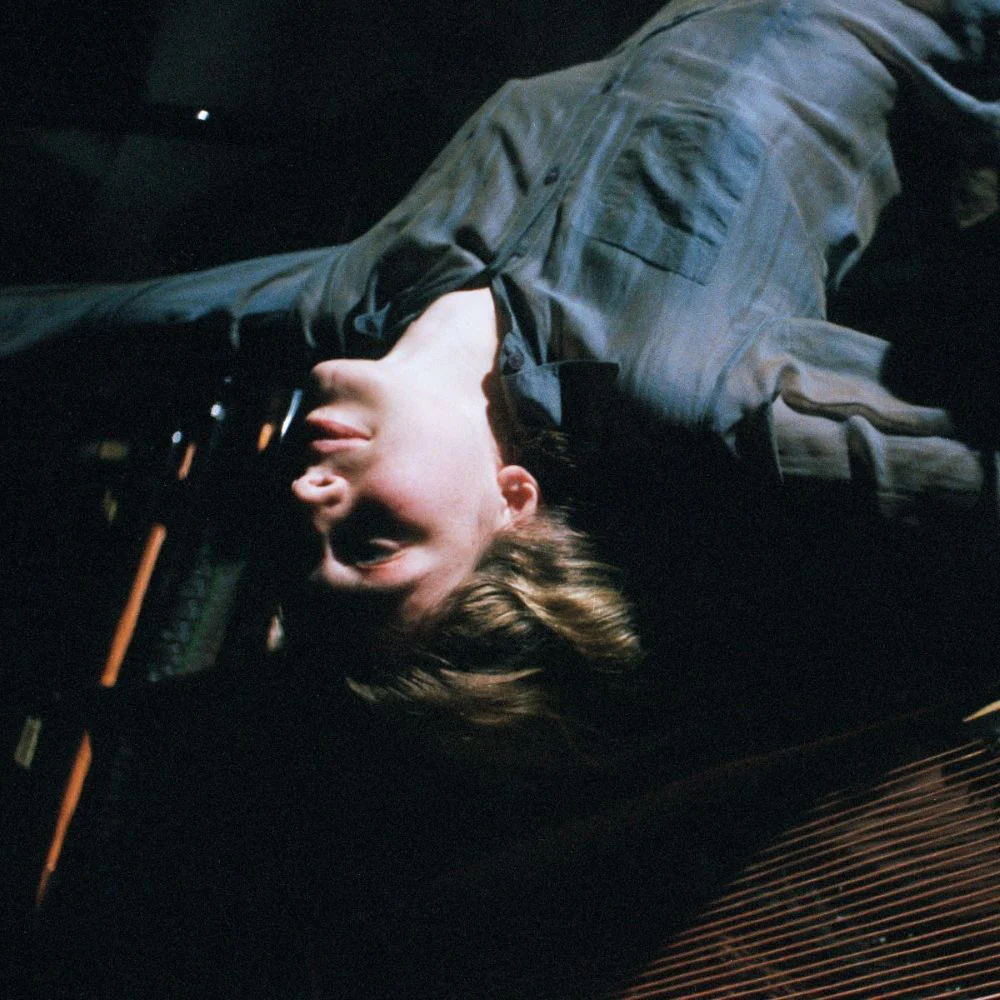
The Australia-born, Seattle-bred, and New York-based singer-songwriter and pianist learned to sing and play piano by ear as a child. Glass took an immediate liking to her parents’ piano, frequently hiding underneath it and letting her imagination run wild. “I felt protected under the wooden beams, and I remember looking up at the legs, wires, and foot pedals and seeing the instrument in a new way—everything suddenly everted,” Glass recalls. “I like to think about E as recalling this memory in sound.”
Glass spent years learning jazz standards, and she also learned to sing in Portuguese after falling in love with Brazilian music. Glass studied jazz voice at The New School under teachers Andrew Cyrille, Ben Street, Jay Clayton, and Kris Davis, and she began singing in piano/bass/drums quartets around New York City. In the latter half of her studies, she started writing her own songs inspired by boundary-pushing artists like Ornette Coleman, Asha Puthli, and Jeanne Lee. During the height of the pandemic, she lived with her brother Costa (who now records as ifiwereme) and felt drawn to the piano again, and they wrote songs together for the first time. Then, over a four-year span, Glass teamed up with Public Records co-founder and producer Francis Harris (Frank & Tony, Adultnapper) and engineer Bill Skibbe (Shellac, Jack White) to record what became E in various studios in Nashville, Brooklyn, Memphis, and Benton Harbor, Michigan.
Glass’ experimental, improvisational works evoke the sensual minimalism of Annette Peacock, the joyful mysteriousness of Carla Bley, and the wistful intimacy of Sibylle Baier. Her reverence for leftfield jazz and free improv greats is evident, but it’s always filtered through her signature nascent, naturalistic sound. “Dreams” is a majestic take on Peacock’s spine-tingling 1971 track of the same name, “Sing Me Softly the Blues” is a minimal, arresting reimagination of Bley’s jazz standard with lyrics adapted by Norwegian vocalist Karin Krog, and “Emahoy” is a languorous tribute to Ethiopian pianist, composer, and nun Emahoy Tsegué-Maryam Guèbrou and her 2006 compilation Éthiopiques. Glass’ music rests on a tactile, mercurial sound and her vocal brawn and versatility. E’s slippery stabs of double bass and drums tickle the ear canal and accentuate the percussiveness of her distinctive low voice, which blends sonorous, androgynous poise with fluttering delicacy.
E also has an enigmatic electronic bent that heightens the blurry emotions of Glass’ songwriting. From background hiss and windy vocals to kaleidoscopic synths, these subtle, tasteful adornments often came from specialized analog equipment: a 1960s underground echo chamber, a Cooper Time Cube (essentially, the hardware equivalent of processing audio through a garden hose), and a 1940s AEA ribbon microphone. But that doesn’t mean E sounds dated—Glass’ songs bloom with a forward-thinking spirit and ultimately function as vehicles for her heady emotions and fragmented memories and dreams. For E, Glass challenged herself to channel full lifetimes within each track. Astonishingly, the seductive opening song “All My Life” manages this feat with just its three-word title. Songs like this one, the breathy ballad “Shrine,” and the spare, folky “On the Way Down” brood over past lives and reflect on memories as if disembodied and viewed from above. From missed connections to retired nicknames (“Good Friends Call Me E”), there’s a pervasive sense of disintegration and a fear of lost time. Other tracks like solo piano-and-voice numbers “Flood” and “Solid Stone” engage in more elusive storytelling, marked by brutal imagery and timeless characters. Then there’s “Human Dust,” a tranquil, rhythm-driven rendition of conceptual artist Agnes Denes’ 1969 text—a quite literal summary of a life.
Eliana Glass has come a long way since daydreaming beneath a towering keyboard. Glass’ peculiar vocal alchemy and vivid piano saunters are masterful and wholly her own, and her forthcoming debut full-length is a gift of resonant beauty and rewarding ambiguity. She now performs around New York City with bandmates Walter Stinson (bass) and Mike Gebhart (drums), in addition to solo shows perched in front of a 1979 Moog Opus organ. Also an accomplished visual artist in her own right, Glass is firmly in control of her inspired visions, even if E is spiritually adrift—though that’s kind of the point. As a musician and an improviser, Glass is enamored by and an adept wielder of the search—for meaning, for sounds, for newness, for connection. And just like Krog crooned on “Sing Me Softly the Blues” in 1975: “Life’s so thrilling / if you search.”
Eliana Glass E Vinyl LP 2025
1. All My Life
2. Shrine
3. Good Friends Call Me E
4. Flood
5. Human Dust
6. Solid Stone
7. Dreams
8. Sing Me Softly The Blues
9. On The Way Down
10. Song for Emahoy
11. Da
12. Good Friends Call Me E (Reprise)
There’s no mistaking the sultry lilt of Eliana Glass—alternating between an offbeat, searching quality and her poignant, awe-inspiring range. Her piano playing also possesses this stirring push and pull between the otherworldly and painfully human—each melody its own unique, aching realm. Glass’ sparse, meditative music often captures, in her words, the “condensation of everyday life,” an image that suits the bittersweet, ephemeral, and abstract nature of her work. Glass’ debut album, E, arrives via Shelter Press, and not only is it a tender portrait of her lifelong relationship with the piano, it’s also a distillation of entire lifetimes into song.
The Australia-born, Seattle-bred, and New York-based singer-songwriter and pianist learned to sing and play piano by ear as a child. Glass took an immediate liking to her parents’ piano, frequently hiding underneath it and letting her imagination run wild. “I felt protected under the wooden beams, and I remember looking up at the legs, wires, and foot pedals and seeing the instrument in a new way—everything suddenly everted,” Glass recalls. “I like to think about E as recalling this memory in sound.”
Glass spent years learning jazz standards, and she also learned to sing in Portuguese after falling in love with Brazilian music. Glass studied jazz voice at The New School under teachers Andrew Cyrille, Ben Street, Jay Clayton, and Kris Davis, and she began singing in piano/bass/drums quartets around New York City. In the latter half of her studies, she started writing her own songs inspired by boundary-pushing artists like Ornette Coleman, Asha Puthli, and Jeanne Lee. During the height of the pandemic, she lived with her brother Costa (who now records as ifiwereme) and felt drawn to the piano again, and they wrote songs together for the first time. Then, over a four-year span, Glass teamed up with Public Records co-founder and producer Francis Harris (Frank & Tony, Adultnapper) and engineer Bill Skibbe (Shellac, Jack White) to record what became E in various studios in Nashville, Brooklyn, Memphis, and Benton Harbor, Michigan.
Glass’ experimental, improvisational works evoke the sensual minimalism of Annette Peacock, the joyful mysteriousness of Carla Bley, and the wistful intimacy of Sibylle Baier. Her reverence for leftfield jazz and free improv greats is evident, but it’s always filtered through her signature nascent, naturalistic sound. “Dreams” is a majestic take on Peacock’s spine-tingling 1971 track of the same name, “Sing Me Softly the Blues” is a minimal, arresting reimagination of Bley’s jazz standard with lyrics adapted by Norwegian vocalist Karin Krog, and “Emahoy” is a languorous tribute to Ethiopian pianist, composer, and nun Emahoy Tsegué-Maryam Guèbrou and her 2006 compilation Éthiopiques. Glass’ music rests on a tactile, mercurial sound and her vocal brawn and versatility. E’s slippery stabs of double bass and drums tickle the ear canal and accentuate the percussiveness of her distinctive low voice, which blends sonorous, androgynous poise with fluttering delicacy.
E also has an enigmatic electronic bent that heightens the blurry emotions of Glass’ songwriting. From background hiss and windy vocals to kaleidoscopic synths, these subtle, tasteful adornments often came from specialized analog equipment: a 1960s underground echo chamber, a Cooper Time Cube (essentially, the hardware equivalent of processing audio through a garden hose), and a 1940s AEA ribbon microphone. But that doesn’t mean E sounds dated—Glass’ songs bloom with a forward-thinking spirit and ultimately function as vehicles for her heady emotions and fragmented memories and dreams. For E, Glass challenged herself to channel full lifetimes within each track. Astonishingly, the seductive opening song “All My Life” manages this feat with just its three-word title. Songs like this one, the breathy ballad “Shrine,” and the spare, folky “On the Way Down” brood over past lives and reflect on memories as if disembodied and viewed from above. From missed connections to retired nicknames (“Good Friends Call Me E”), there’s a pervasive sense of disintegration and a fear of lost time. Other tracks like solo piano-and-voice numbers “Flood” and “Solid Stone” engage in more elusive storytelling, marked by brutal imagery and timeless characters. Then there’s “Human Dust,” a tranquil, rhythm-driven rendition of conceptual artist Agnes Denes’ 1969 text—a quite literal summary of a life.
Eliana Glass has come a long way since daydreaming beneath a towering keyboard. Glass’ peculiar vocal alchemy and vivid piano saunters are masterful and wholly her own, and her forthcoming debut full-length is a gift of resonant beauty and rewarding ambiguity. She now performs around New York City with bandmates Walter Stinson (bass) and Mike Gebhart (drums), in addition to solo shows perched in front of a 1979 Moog Opus organ. Also an accomplished visual artist in her own right, Glass is firmly in control of her inspired visions, even if E is spiritually adrift—though that’s kind of the point. As a musician and an improviser, Glass is enamored by and an adept wielder of the search—for meaning, for sounds, for newness, for connection. And just like Krog crooned on “Sing Me Softly the Blues” in 1975: “Life’s so thrilling / if you search.”
Product Information
Product Information
Shipping & Returns
Shipping & Returns
Description
1. All My Life
2. Shrine
3. Good Friends Call Me E
4. Flood
5. Human Dust
6. Solid Stone
7. Dreams
8. Sing Me Softly The Blues
9. On The Way Down
10. Song for Emahoy
11. Da
12. Good Friends Call Me E (Reprise)
There’s no mistaking the sultry lilt of Eliana Glass—alternating between an offbeat, searching quality and her poignant, awe-inspiring range. Her piano playing also possesses this stirring push and pull between the otherworldly and painfully human—each melody its own unique, aching realm. Glass’ sparse, meditative music often captures, in her words, the “condensation of everyday life,” an image that suits the bittersweet, ephemeral, and abstract nature of her work. Glass’ debut album, E, arrives via Shelter Press, and not only is it a tender portrait of her lifelong relationship with the piano, it’s also a distillation of entire lifetimes into song.
The Australia-born, Seattle-bred, and New York-based singer-songwriter and pianist learned to sing and play piano by ear as a child. Glass took an immediate liking to her parents’ piano, frequently hiding underneath it and letting her imagination run wild. “I felt protected under the wooden beams, and I remember looking up at the legs, wires, and foot pedals and seeing the instrument in a new way—everything suddenly everted,” Glass recalls. “I like to think about E as recalling this memory in sound.”
Glass spent years learning jazz standards, and she also learned to sing in Portuguese after falling in love with Brazilian music. Glass studied jazz voice at The New School under teachers Andrew Cyrille, Ben Street, Jay Clayton, and Kris Davis, and she began singing in piano/bass/drums quartets around New York City. In the latter half of her studies, she started writing her own songs inspired by boundary-pushing artists like Ornette Coleman, Asha Puthli, and Jeanne Lee. During the height of the pandemic, she lived with her brother Costa (who now records as ifiwereme) and felt drawn to the piano again, and they wrote songs together for the first time. Then, over a four-year span, Glass teamed up with Public Records co-founder and producer Francis Harris (Frank & Tony, Adultnapper) and engineer Bill Skibbe (Shellac, Jack White) to record what became E in various studios in Nashville, Brooklyn, Memphis, and Benton Harbor, Michigan.
Glass’ experimental, improvisational works evoke the sensual minimalism of Annette Peacock, the joyful mysteriousness of Carla Bley, and the wistful intimacy of Sibylle Baier. Her reverence for leftfield jazz and free improv greats is evident, but it’s always filtered through her signature nascent, naturalistic sound. “Dreams” is a majestic take on Peacock’s spine-tingling 1971 track of the same name, “Sing Me Softly the Blues” is a minimal, arresting reimagination of Bley’s jazz standard with lyrics adapted by Norwegian vocalist Karin Krog, and “Emahoy” is a languorous tribute to Ethiopian pianist, composer, and nun Emahoy Tsegué-Maryam Guèbrou and her 2006 compilation Éthiopiques. Glass’ music rests on a tactile, mercurial sound and her vocal brawn and versatility. E’s slippery stabs of double bass and drums tickle the ear canal and accentuate the percussiveness of her distinctive low voice, which blends sonorous, androgynous poise with fluttering delicacy.
E also has an enigmatic electronic bent that heightens the blurry emotions of Glass’ songwriting. From background hiss and windy vocals to kaleidoscopic synths, these subtle, tasteful adornments often came from specialized analog equipment: a 1960s underground echo chamber, a Cooper Time Cube (essentially, the hardware equivalent of processing audio through a garden hose), and a 1940s AEA ribbon microphone. But that doesn’t mean E sounds dated—Glass’ songs bloom with a forward-thinking spirit and ultimately function as vehicles for her heady emotions and fragmented memories and dreams. For E, Glass challenged herself to channel full lifetimes within each track. Astonishingly, the seductive opening song “All My Life” manages this feat with just its three-word title. Songs like this one, the breathy ballad “Shrine,” and the spare, folky “On the Way Down” brood over past lives and reflect on memories as if disembodied and viewed from above. From missed connections to retired nicknames (“Good Friends Call Me E”), there’s a pervasive sense of disintegration and a fear of lost time. Other tracks like solo piano-and-voice numbers “Flood” and “Solid Stone” engage in more elusive storytelling, marked by brutal imagery and timeless characters. Then there’s “Human Dust,” a tranquil, rhythm-driven rendition of conceptual artist Agnes Denes’ 1969 text—a quite literal summary of a life.
Eliana Glass has come a long way since daydreaming beneath a towering keyboard. Glass’ peculiar vocal alchemy and vivid piano saunters are masterful and wholly her own, and her forthcoming debut full-length is a gift of resonant beauty and rewarding ambiguity. She now performs around New York City with bandmates Walter Stinson (bass) and Mike Gebhart (drums), in addition to solo shows perched in front of a 1979 Moog Opus organ. Also an accomplished visual artist in her own right, Glass is firmly in control of her inspired visions, even if E is spiritually adrift—though that’s kind of the point. As a musician and an improviser, Glass is enamored by and an adept wielder of the search—for meaning, for sounds, for newness, for connection. And just like Krog crooned on “Sing Me Softly the Blues” in 1975: “Life’s so thrilling / if you search.”